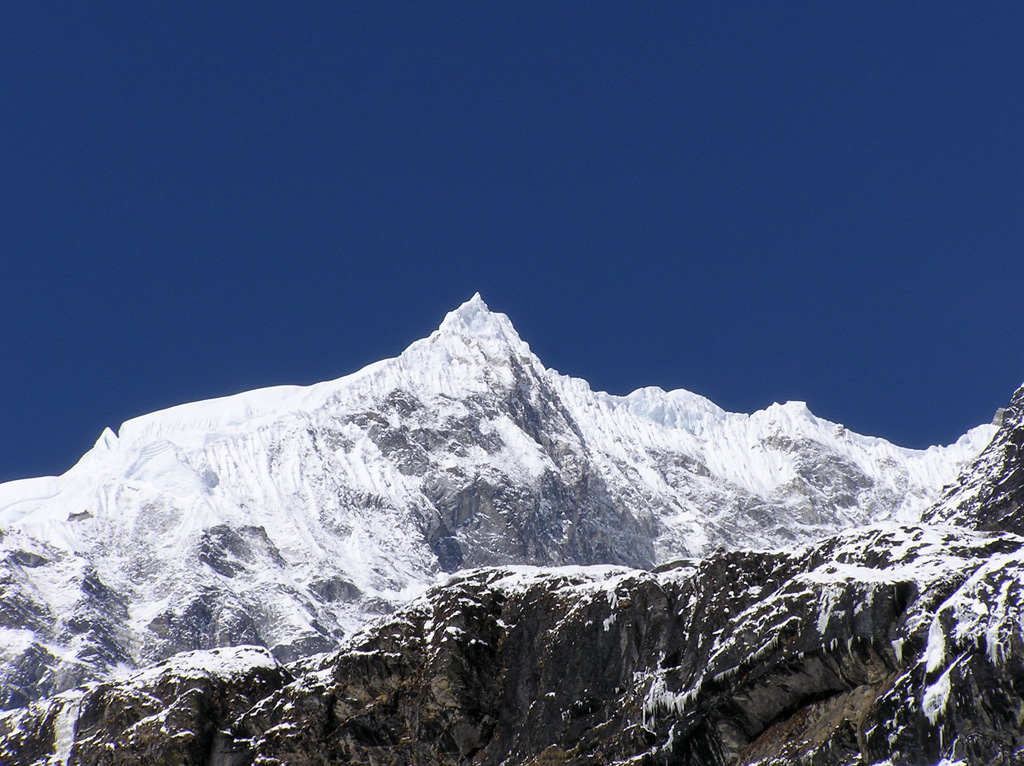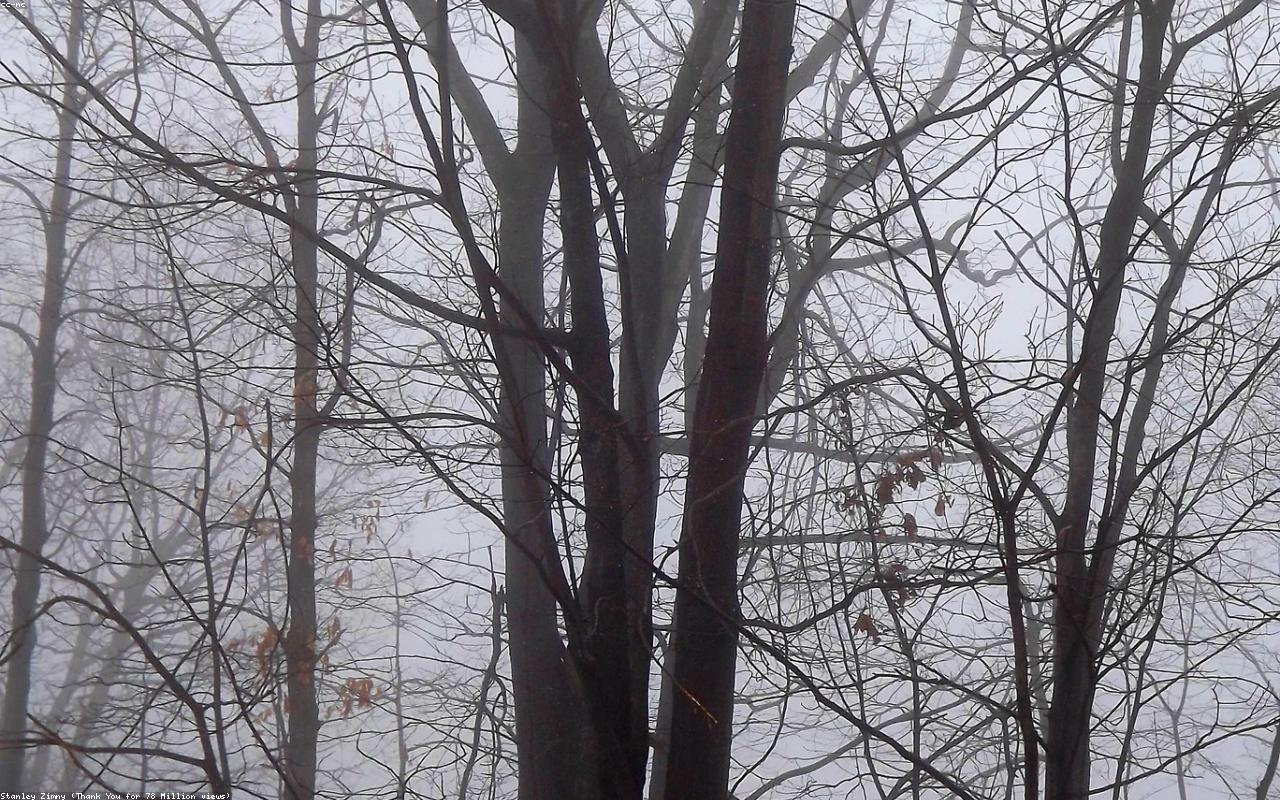
From May 2025 through April 2026, on a section of the Appalachian Trail between Charlies Bunion and Newfound Gap, the editor of this magazine kept a small notebook of fog observations. She walked the section forty-one times in twelve months. On thirty-one of those walks, she encountered fog for at least part of the day. The notebook is the basis of this article.
The Smokies are named for what they do. The Cherokee word translated variously as Shaconage or Sa-ko-na-ge, and the English settler-name that replaced it, both refer to the bluish haze produced by the volatile organic compounds released by the temperate broadleaf forest in warm weather. The haze is not fog. The fog is something different and is produced by other mechanisms.
Three types of fog occur regularly on Smokies ridges. They behave differently and require different responses from a walker.
The first is radiation fog, formed in valleys on clear, calm nights when the ground radiates heat to the sky and the surface air cools to its dewpoint. Radiation fog pools in valleys, lies flat against the ground, and rarely climbs more than a few hundred metres. A walker leaving Newfound Gap at dawn in radiation-fog conditions will often emerge above the fog within twenty minutes of climbing and look down on a sea of white that follows the contour lines of the lower drainages.
Radiation fog is benign. It burns off within an hour of the sun reaching the valley floor. It is photogenic. It is not a navigation hazard for a walker on the ridge.
The second is advection fog, formed when warm, moist air moves over a cooler surface. In the Smokies, this most often occurs when southerly air carrying Gulf moisture moves over the ridges in spring and autumn and cools enough to condense. Advection fog can persist for days. It is the fog that produces the conditions Smokies walkers most often encounter: a steady, soaking, low-visibility cloud that sits on the ridge for thirty-six hours and shows no inclination to lift.
Advection fog is a navigation problem. Visibility on the ridge during a typical advection event is between thirty and a hundred metres. The walker can see the path immediately ahead and not much else. Landmarks disappear. The route, which on a clear day reads itself, becomes a sequence of small navigational decisions, none difficult individually but cumulatively demanding.
The third is upslope fog, formed when air is forced up a windward slope and cools as it rises. In the Smokies, upslope fog is most common on the western and southwestern faces during onshore flow. It can develop quickly. A ridge that is clear at nine can be in cloud by ten thirty as the morning's wind pushes moist air against the slope.
Upslope fog often clears within hours as the wind shifts or the air dries. It is the fog most often associated with the textbook Smokies experience: a walker climbing into cloud, walking for an hour in white, then descending out of it on the lee side.
Navigating in fog on a ridge is, contrary to the usual advice, mostly a matter of patience rather than equipment. A walker with a paper map, a compass, an altimeter, and a properly downloaded GPX track has all the tools they need. The challenge is psychological.
Fog distorts time and distance. A kilometre of trail in clear weather and a kilometre in dense fog feel like different distances. Walkers consistently underestimate how long they have been moving and overestimate how far they have covered. The cure is the watch. Check the time at every junction. Check the altimeter at every climb. Trust the instruments over the impression.
Sound behaves oddly in fog. Some sounds travel further than they do in clear air, because the moisture damps high frequencies and the residual lower frequencies carry. Other sounds disappear entirely. A walker in fog on the AT near Charlies Bunion can sometimes hear cars on the Newfound Gap Road three kilometres distant. On other days, the same walker cannot hear another party twenty metres away on the same trail.
The most useful trick for sustained ridge walking in fog is the pacing count. The walker establishes how many double-paces they take to cover a hundred metres on similar terrain in clear conditions. In fog, they count paces between known points on the map. Combined with a compass bearing and an altimeter, this is enough to maintain a fix on position within a margin of fifty metres or so over several kilometres.
The pacing count is taught in military and search-and-rescue navigation courses. It is rarely taught to recreational walkers. It should be. It is the single technique that most distinguishes a competent fog navigator from a walker who is hoping the fog will lift before they reach the next junction.
Some fog conditions warrant turning around. The thirty-one fog days in the notebook produced four turnarounds. Three were in heavy advection fog with rain and a steady northeast wind, which on a cold day in March or November shaded toward dangerous. One was in upslope fog so dense that the trail itself was difficult to keep at arm's length, on a day when the editor was walking alone and the next bailout was three kilometres further.
The remaining twenty-seven fog days produced walks that were quieter, slower, and more attentive than clear-day walks. The forest in fog is a different forest. The wildlife is different; the editor's notebook records substantially more black bear and white-tailed deer in fog than in clear weather, presumably because both species use fog as cover.
The other distinguishing feature of Smokies fog, recorded again and again in the notebook, is its acoustic intimacy. A wood thrush singing twenty metres away in fog occupies the entire audible world. A pileated woodpecker drumming on a hollow tree sounds like a small drum kit. The lack of visual stimulation allows the auditory landscape to expand into the available attention.
A walker who learns to navigate fog instead of waiting for it to lift gains access to a substantial fraction of the year. In the Smokies, in some sections, fog days account for more than fifty per cent of the calendar. A walker who only goes out in clear weather is restricting their walking life to a half of what is available.
Margaret Holcomb keeps her fog notebook in pencil. The pencil works in damp weather. The pen does not.