On the night of May 19, a little after eleven, biologist Dale Whitlock made a single sharp call into the dark from a fern bench above the Quinault River. He waited. The forest was silent except for the river two hundred feet below.
He called again, three short hoots, a pause, two more. A reply came from upslope, faint and unmistakable. A male northern spotted owl, Strix occidentalis caurina, calling from his territory in a stand of Douglas-fir that the crew has known and named since 2009.
The territory is called Bunch Creek 4. It is one of forty-one monitored spotted owl territories on the western slope of Olympic National Park.
Whitlock, fifty-eight, has worked on this monitoring project for the U.S. Geological Survey since 2002. He has heard most of these owls many times. He keeps a private list of the territorial males he has known longest. The Bunch Creek 4 male, by his estimate, is at least fifteen years old.
The northern spotted owl was federally listed as threatened in 1990. The listing led to the Northwest Forest Plan of 1994, which protected roughly 24.5 million acres of federal land from large-scale logging.
The plan worked, in the sense that the old-growth forest the owl depends on stopped being clear-cut at industrial pace. The plan did not work, in the sense that the owl has continued to decline anyway, at roughly four percent per year across its range, for reasons that have less to do with timber and more to do with another owl.
The barred owl, Strix varia, is a closely related eastern species that began moving westward across the boreal forest in the early twentieth century. It reached the Olympic Peninsula in the 1990s. It is slightly larger than the spotted owl, more aggressive, more dietarily flexible, and now substantially more numerous.
Where barred owls establish, spotted owls disappear. The mechanism is not entirely competition; it is partly displacement, partly hybridization, partly direct predation of spotted owl young.
Whitlock has watched it happen in real time. In 2009, when the Bunch Creek 4 male was first banded, the surrounding 10-kilometer survey grid produced twenty-three confirmed spotted owl detections per season. In 2025 it produced four.
The crew that morning, four people including Whitlock, was walking a transect along the upper Quinault. They moved slowly, in single file, stopping every two hundred meters for a five-minute listening point.
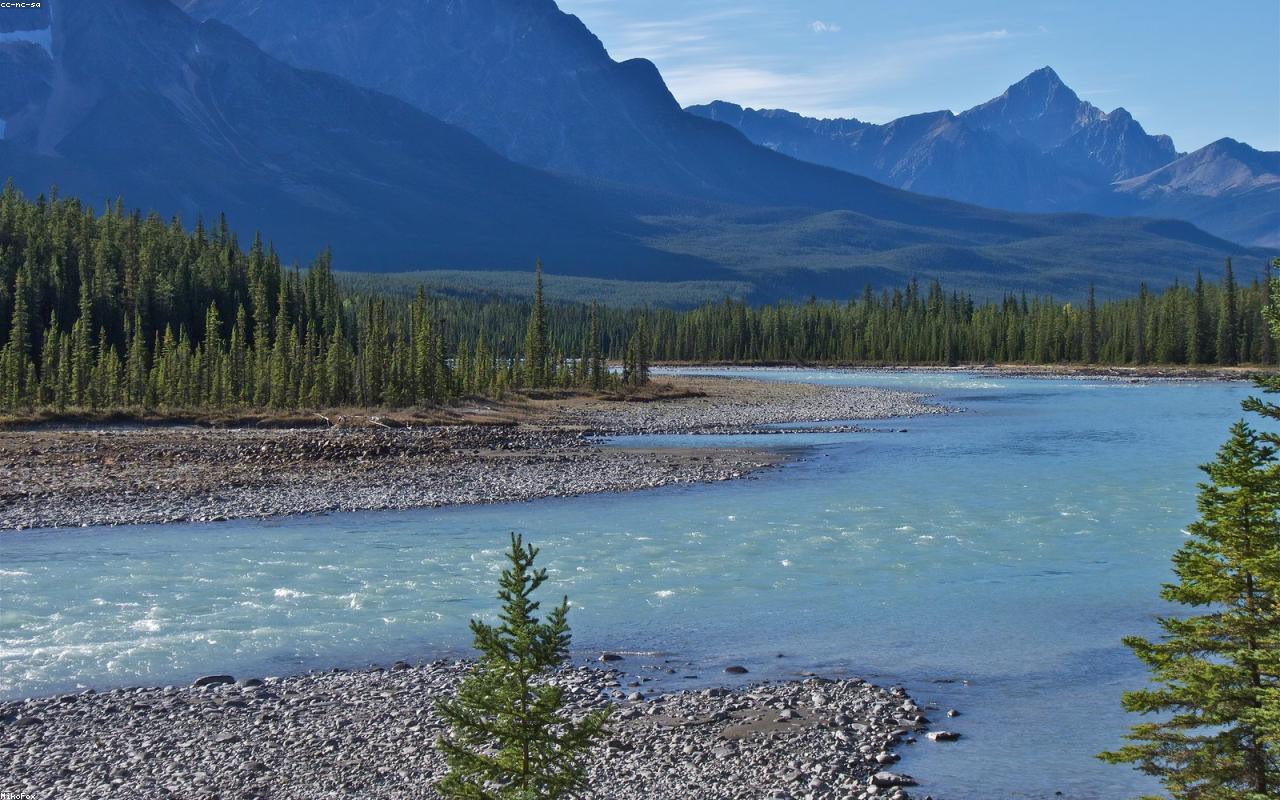
The forest at Bunch Creek is the kind of place that catches a first-time visitor by the throat. Western hemlock, Sitka spruce, and Douglas-fir grow to heights of two hundred fifty feet. The understory is sword fern, salal, and Oregon grape. The light is green. The sound, when there is sound, is mostly the river.
Whitlock has been coming here long enough that he no longer photographs it. The other crew members were quieter than tourists but not silent. A graduate student named Lila Mokoena, twenty-eight, kept the data sheet. A volunteer named Theo Carrera, sixty-six, retired from a thirty-year career with the Forest Service, carried the recording equipment.
At the third listening point, just after dawn, a barred owl called twice from down the slope. Mokoena marked it on the sheet without comment.
The federal recovery program has, since 2021, included a controversial barred owl removal pilot. The premise is straightforward: if barred owls are functionally extirpating spotted owls, and if the spotted owl is to persist, the barred owl population in spotted owl habitat must be reduced.
The mechanism, in practice, is shooting. Trained federal contractors call barred owls into range with a recording, then shoot them with shotguns. The pilot in the California study area documented a partial spotted owl rebound where removal was sustained.
Whitlock does not take a public position on the removal program. Within the crew he speaks of it with the flat reluctance of someone who has thought about it more than he wants to.
"I started this job to count owls," he said, on the walk back to the trailhead. "I didn't sign up to kill them. But I also didn't sign up to be the last person to write down a spotted owl on this transect. The math is what it is."
The Olympic Peninsula has not been included in the active removal program. The crew's work, for now, is to monitor and document, to keep an unbroken record of which territories still hold birds, and to band any young that fledge.
By 2026, eleven of the forty-one Olympic territories have produced no confirmed spotted owl detection for three consecutive seasons. Those territories are not yet declared vacated. The protocol requires five.
On the way out, Mokoena stopped at a turnout where the river was visible through the trees. She had grown up in Cape Town and had only been working on the project for two field seasons.
"I want to be clear about what I'm doing here," she said. "I'm getting trained in how to record a disappearance."
The Bunch Creek 4 male called once more, just before dawn, from somewhere across the river. Then the forest went quiet for the day.