On the night of May 21, after a thirty-minute soaking rain, herpetologist Brooks Gillen turned off the dirt forest road below Caesars Head, South Carolina, walked four hundred yards down a faint footpath, and crouched beside a wet rock at the head of a seep at 2,840 feet of elevation.
He turned on his red headlamp. Within the first square meter he could see six salamanders.
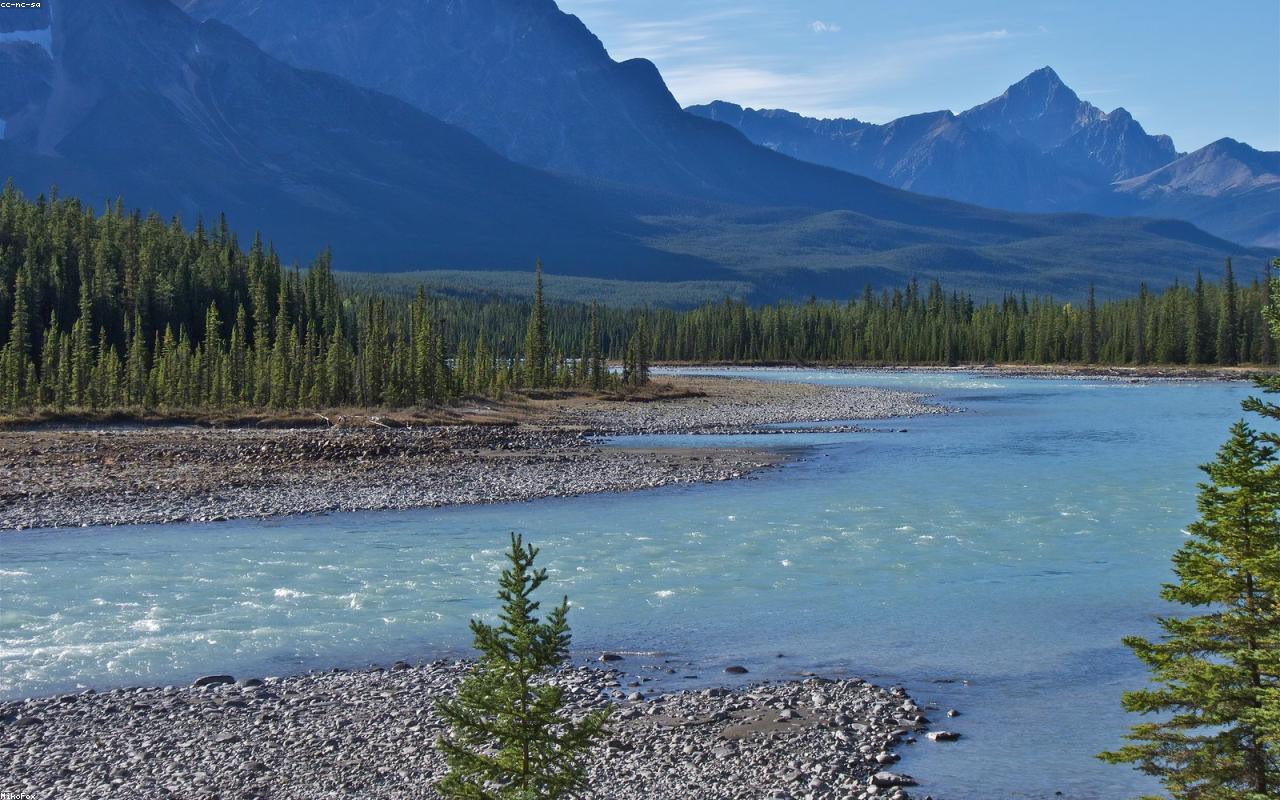
The Mountain Bridge Wilderness covers roughly 11,000 acres on the South Carolina side of the Blue Ridge escarpment, where the southern Appalachians fall off sharply toward the Piedmont. The escarpment generates orographic rainfall in extraordinary quantities; some south-facing coves here receive ninety inches a year.
What that water supports, in addition to a cathedral of tulip poplar and hemlock, is the densest assemblage of lungless salamanders in the world.
Plethodontid salamanders, family Plethodontidae, breathe entirely through their skin and the lining of their mouths. They have no lungs. They require moist substrate continuously, and they cannot tolerate even brief dehydration. They are also, by sheer biomass, the most abundant terrestrial vertebrate in many southern Appalachian forests.
Gillen, forty-seven, teaches at Furman University in Greenville. He has been running unofficial salamander counts at the Mountain Bridge seep since 2008. The protocol he uses is his own: one observer, one hour, one square meter, after a rain event of at least a quarter inch, between sunset and midnight, in the months of April through June.
The data is not published. It exists in a black moleskine notebook that lives on his office bookshelf. He has filled four of them.
On the night of May 21, the count came to thirty-eight individual salamanders of five species in the one-square-meter plot, in fifty minutes of careful observation.
The most numerous, by some distance, was the southern gray-cheeked salamander, Plethodon metcalfi, a slender, dark-bodied animal four to five inches long. Gillen counted twenty-two in the plot.
The second most numerous was the seal salamander, Desmognathus monticola, a stockier, semi-aquatic species that hunts the edges of the seep itself. He counted nine.
The other three species, in smaller numbers: a single Blue Ridge two-lined salamander, four southern Appalachian salamanders, and two specimens he did not identify with confidence in the field and noted as Plethodon sp.
Gillen worked slowly. The protocol forbids handling. He used the headlamp and a small notebook on a thigh-strap. He moved his feet only when absolutely necessary, and then only to a different patch of leaf litter that he had already inspected.
The salamanders themselves were largely indifferent to him. Some held still under the red light. Some, mostly the gray-cheeks, moved a few inches and then resumed their slow hunt for springtails and small beetles in the surface litter.
"What you are looking at," he said, almost in a whisper, "is the actual biomass of this forest. The bears, the deer, the warblers, they are the visible animals. These are the animals that, by weight, are most of the vertebrate life on this slope."
A 1975 study from Hubbard Brook in New Hampshire put northern red-backed salamander biomass at roughly twice that of the breeding bird community and equal to that of the small mammals in the same forest. Estimates for the southern Appalachians, where species diversity is higher and conditions are wetter, are higher still.
Gillen has watched the count at this particular seep stay broadly steady from 2008 to about 2018. From 2019 onward, he said, the totals have begun to drift downward. The 2025 average for the season was twenty-nine animals per plot. The 2024 average was thirty-three. The 2018 average was forty-one.
He is careful about what he says next. The decline could be a sampling artifact, a function of weather patterns shifting the timing of activity, or any of half a dozen other things that one observer with one notebook cannot rule out.
It could also be a real decline. The amphibian fungal pathogen Batrachochytrium salamandrivorans, Bsal, which has caused catastrophic salamander mortality in Europe, has not yet been detected in the eastern United States. Federal and state agencies have run targeted swab surveillance at sites in the southern Appalachians since 2016, including at Mountain Bridge. All returns have so far been negative.
Gillen's count is not designed to detect Bsal, but the decline he is seeing keeps him alert to the possibility.
He finished the May 21 count at 10:42 p.m., closed the notebook, and sat for ten more minutes without writing. The seep continued to drip. The frogs of the lower wetland, several hundred feet below, called intermittently in the dark.
On the walk out he stopped once to lift a flat sandstone slab on the trail edge. Underneath were three more salamanders he did not log, because they were outside the plot.
"Most people who walk this trail on a wet night," he said, replacing the slab carefully, "are walking on top of more vertebrates per square foot than they will ever see in their lives, anywhere else. And they will never know it."
His next count was scheduled for June 4, weather permitting. The notebook went back in his daypack. The headlamp clicked off. The forest went back to being dark, wet, and full of small animals that no one was watching.