In the second week of May, on the high plateau above Ben Macdui in the Cairngorms, the snow lies in patches that the maps do not show, the burns run with meltwater that the maps do not gauge, and the wind comes off the granite at speeds that the forecasts underestimate by perhaps a third. The shoulder season in Scotland's largest mountain range is a narrow window. Astrid Pereira has been walking through it most years for two decades.
She drove north from Cardiff on a Friday in early May this year and arrived at the Glenmore campsite on the north side of the Cairngorms shortly after dark. She intended to walk a four-day loop on the plateau, descending each night to a sheltered glen and ascending again in the morning. The route she had planned would total about sixty kilometres and would cross the summit of Ben Macdui, the second highest mountain in Britain.
Pereira's planning method for shoulder-season routes in the Cairngorms is essentially the method she teaches her students at Plas y Brenin, with one adaptation. She treats the published maps as the starting point of the planning, not the final reference. The Cairngorm plateau in May is in a state of transition that the maps cannot represent. The cartographer's snow line, drawn on the map as a static feature, has moved by the time the map is printed. The cartographer's burns, drawn as steady blue lines, are in May running with three or four times their summer volume.
Her first source, after the standard Ordnance Survey 1:25,000 sheets, is the daily mountain forecast issued by the Mountain Weather Information Service. The MWIS forecast for the Cairngorms is unusually detailed, includes a specific note about the state of the snowpack, and is written by forecasters with mountaineering backgrounds. Pereira reads the forecast for the seven days preceding a planned walk and for the days of the walk itself.
Her second source is the daily blog of the Cairngorm Mountain Rescue Team, which during May posts informal observations on snow conditions, burn levels, and the state of the river crossings. The blog is written by the team's deputy leader, a man named Ian Strathie, who has been climbing in the Cairngorms since the 1980s. The observations are not formal advice. They are field notes. Pereira treats them as the best available current information.
Her third source is the photograph. She maintains a small archive of her own photographs from previous May visits to the Cairngorms, indexed by location, and she reviews them before each trip. The photographs tell her what the snow patches typically look like at this point in the season, where the burns are typically crossable, and where she has previously had to detour. The archive is, by her own description, the most valuable piece of planning material she has, and it is not available to a first-time visitor at any price.
With the forecasts, the blog, and the photographs in hand, Pereira returns to the maps. She marks the planned route in pencil, identifies the four highest points on the route, the three river crossings, the two longest exposed sections, and the four candidate camp locations. For each she notes what the maps say and what her other sources say, and she resolves the discrepancies.
The first river crossing on her planned route, of the Lairig Ghru burn below the Pools of Dee, the maps showed as a minor watercourse that could be stepped across. The MWIS forecast for the preceding week had reported heavy snowmelt with daytime temperatures reaching twelve degrees Celsius at 1,000 metres. The Mountain Rescue blog had reported, three days before her departure, that the burn at the planned crossing point was knee-deep and fast-flowing. The photograph archive included a May 2019 image of the same crossing, taken at a similar point in the season, showing exactly the conditions Strathie was describing.
Pereira moved the crossing point upstream by about four hundred metres to a wider, shallower section that she had used in 2019 and 2022. She marked the new crossing point on the map in red. The detour added perhaps twenty minutes to the day. It removed, she judged, the most likely failure mode of the route.
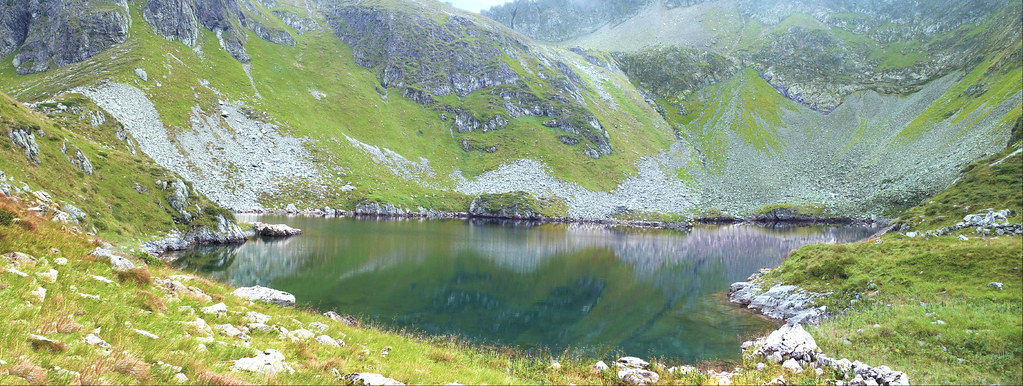
The second adaptation was the camp. Her originally planned camp on the second night was at the head of Coire Etchachan, a sheltered hollow at about 900 metres. The maps suggested it as a reasonable camp location. Her photographic archive showed that the location, in early May, was often still partly snow-covered, with running water from a melting snowfield directly above. She moved the camp down to the loch at the foot of the corrie, at about 800 metres, which was reliably snow-free and offered better access to the planned descent line if weather forced a retreat.
The third adaptation was the timing of the plateau crossing. Her originally planned route would have crossed the summit of Ben Macdui in early afternoon on the second day. The MWIS forecast for that day showed a high probability of cloud lifting only after midday. Pereira reorganised the day to cross the summit in the late afternoon, when the forecast showed the cloud most likely to have lifted, with the descent into Glen Derry following in the long evening light.
These adaptations took perhaps an hour, spread across a quiet evening before the trip. They illustrate, in Pereira's view, the difference between using a map and reading a route. The map is a document of static features. The route is a movement through changing conditions. The cartographer cannot anticipate the day's snowmelt. The walker must.
She does not, she emphasised, mean to disparage the Ordnance Survey. The OS maps of the Cairngorms are excellent. The 1:25,000 series is the best mountain mapping she has used anywhere in the world. The maps are accurate to a degree of detail that walkers in many other countries would consider luxurious. What the maps cannot do is what no map can do, which is to describe conditions that change weekly.
She arrived at the Glenmore campsite, set up a small tent, and slept badly. The wind in the pines was loud all night. She rose at five-thirty, made coffee on a small stove, and looked at the sky. The forecast had been right. The cloud was on the tops but lifting. She packed her gear, drove the short distance to the trailhead at the Sugar Bowl, and began to walk.
By midday she was on the plateau. The snow patches were where she had expected them. The wind was, as she had anticipated, stronger than the forecast had suggested. She put on a heavier jacket, adjusted her hood, and pressed on. The cloud lifted off Ben Macdui at twenty past four in the afternoon. She crossed the summit at six. The descent into Glen Derry, in the long light, was the kind of walk she remembered why she did this for.
The first river crossing, the next morning, was knee-deep and fast as the Mountain Rescue blog had reported. The detour she had planned worked. She crossed in good order, kept her boots reasonably dry, and continued. The second camp, at the loch below Coire Etchachan, was sheltered and snow-free. The third day was uneventful.
On the fourth morning she walked out to the road at Linn of Dee, twelve kilometres from her camp, in steady rain. She had arranged for a taxi to meet her there. The taxi was on time. She rode back to the campsite, packed her tent, and drove south.
On the long drive home she stopped at a roadside cafe near Perth, drank a cup of tea, and wrote in her trail journal. The note recorded the conditions at each camp, the temperatures she had measured at dawn, the height of the burns at each crossing, and the locations where the snow patches had begun and ended. The notes will go into her photographic archive when she gets back to Cardiff. They will be available for the next walk, in the next May, when the planning starts again.