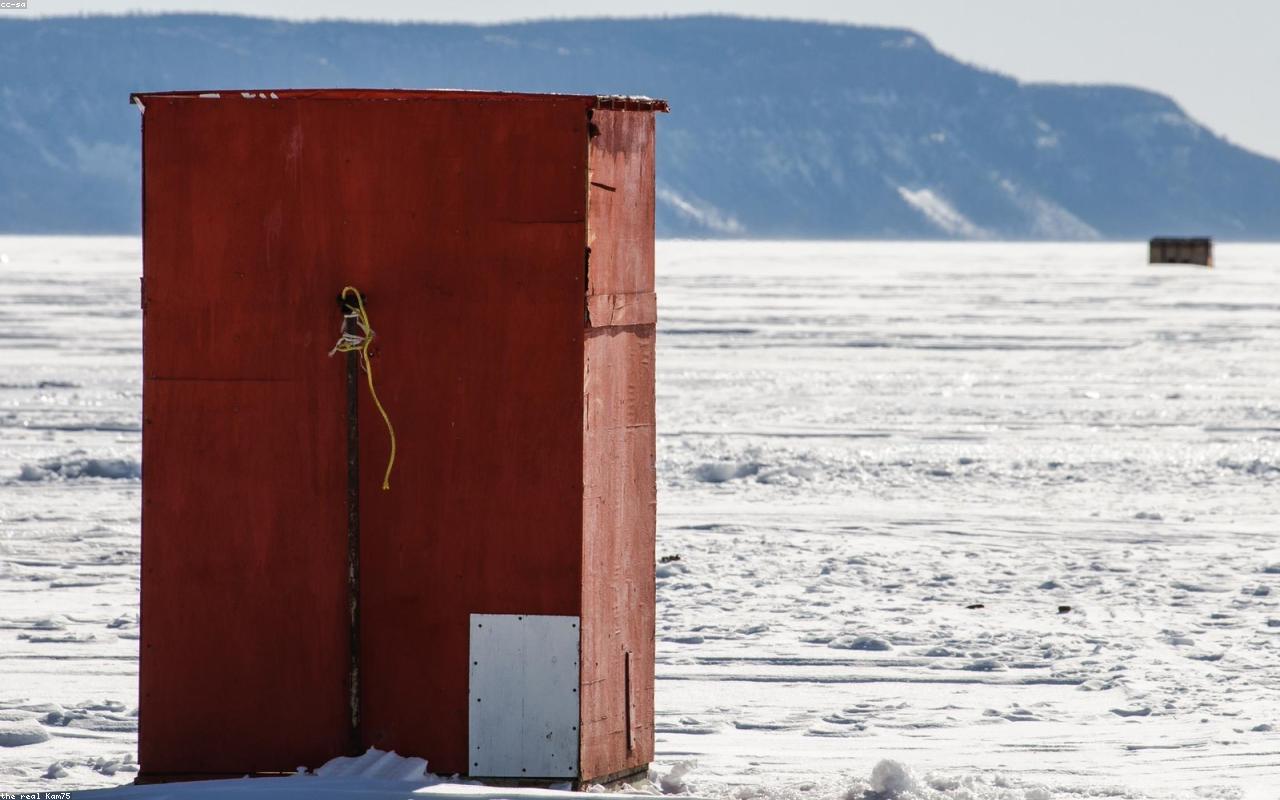
The hut sits on a knoll above the southern end of Glen Brittle on the Isle of Skye, with an east-facing window that frames the southern half of the Cuillin Ridge from Sgùrr nan Eag to Sgùrr Alasdair, and a smaller north window that looks across the glen to the long descent of Coir' a' Ghrunnda.
It belongs to a sheep farmer named Iain MacInnes whose family has worked this croft since the 1890s. The hut, however, is recent. He built it in 2019 from a wooden shed kit, lined it with sheep's wool insulation, fitted a small cast-iron stove, and put it on the rental market through a Highland self-catering booking site that lists, at last count, eleven similar huts within forty miles.
The booking is for two people. The price in late May 2026 was sixty pounds a night. There is no electricity. There is no Wi-Fi. There is a composting toilet in a separate small structure thirty feet from the door, and water from a spring-fed tank that requires boiling.
Margaret Holcomb booked the hut for fourteen nights, from May 18 to June 1, 2026, on the editorial principle that it is impossible to write usefully about a way of being in the world that you have not, yourself, tried.
She drove from Glasgow on May 18, a five-hour drive, the last of which is the single-track A863 along the west coast of Skye to Carbost, and then the still narrower B-class road down Glen Brittle to the campsite, and then a hundred metres of grass track up to the hut.
She unpacked in twenty minutes. There was very little to unpack.
She had brought: four changes of clothing, a wool jumper, a waterproof shell, walking boots, a sleeping bag, two notebooks, a paperback edition of Nan Shepherd, a paperback edition of Iain Crichton Smith's Consider the Lilies, food for the first three days, and a small French press.
She had not brought: a phone charger (she had brought the phone but planned not to charge it), a laptop, a tablet, a book of crossword puzzles, or any device of any kind for playing music. The hut has no clock. She brought a small wind-up alarm clock that she did not, in the event, use.
She woke on the first morning at what turned out, when she walked down to her car to check the time, to be 6:40 a.m. The sky was overcast. The Cuillin were entirely hidden by cloud. She lit the stove with the kindling Iain had left in a bucket by the door, made coffee, and sat at the small table by the east window with her notebook.
She did not write anything for the first hour. She drank her coffee. She watched the cloud move on the ridge across the glen. She made more coffee. At 8:30 by her best estimate she wrote her first sentence of the trip: the hut is very small and I have already, in some way I cannot yet name, slowed down.
The first three days she walked. She did the standard tourist walk to the Fairy Pools on the first afternoon, in company with perhaps forty other walkers on the popular trail. She walked to Coire Lagan on the second day and saw two parties of climbers descending from the Sgùrr Alasdair scree run. On the third day she walked the long round to Loch Coruisk and back, fourteen miles, and came home to the hut at 7 p.m. with her boots full of water and her legs the satisfied tired of a day spent at the work for which legs are designed.
The next four days it rained. She did not walk far. She read both of her books, slowly, and made bread in a Dutch oven on the cast-iron stove using flour she bought at the small shop in Carbost. The bread was not very good. She ate it anyway.
She wrote in her notebook on the fifth morning: I have not spoken to another human being in two and a half days. I have not used a screen of any kind in five. I am, against all expectation, not bored.
Iain came by on the seventh day to check on the water tank and brought her a small bag of fresh eggs from his hens. They talked for forty minutes at the door of the hut. He had been working the croft for thirty-one years. His father had worked it before him. His son was working in Inverness as a software engineer and did not, Iain thought, want to come home to the croft, although the offer remained.
He said this without bitterness. He said the croft would, in the end, find someone, or it would not, and either way the land would still be there.
He left her four eggs. She made an omelette for dinner that night that was the best omelette she had eaten in a year, possibly because the eggs were less than a day old, possibly because she had cooked it on a cast-iron stove she had lit herself with kindling she had carried in.
The second week the weather cleared. She walked every day. She did the Sgùrr na Banachdich ridge on a windless Tuesday, the longest single day of the trip, eleven hours of walking on broken ground at a steady pace. She saw a golden eagle from the summit ridge, circling perhaps three hundred metres below her, and watched it for as long as she could.
She wrote in the evening: the eagle was below me. this is rare. I will not see it again from above for a long time.
She left on the morning of June 1. She had used, over fourteen days, about a third of a tank of water, about a quarter cord of birch from the woodpile Iain had stacked behind the hut, and three boxes of safety matches. She had read two books and started a third. She had walked, by her rough count, approximately ninety miles.
She left the hut as she had found it, swept, the stove cold, the kindling bucket refilled from the woodpile, the kettle on the stove, the notebook of previous guests on the table with her own entry added at the bottom of the most recent page.
Her entry read: fourteen days. weather mixed. cuillin visible perhaps half the mornings. eggs from the croft were excellent. the smaller the room, the larger the view from the window. thank you, Iain. m. holcomb, north carolina.
She drove back to Glasgow that afternoon and flew home the next day. The hut, she suspects, will be booked for most of the summer and most of the autumn and most of the following spring. The Highland self-catering business is healthy. There is, it turns out, a market for rooms small enough that the view does most of the work.