The Northumberland Coast Path is sixty-two miles from Cresswell, north of Newcastle, to the Scottish border at Berwick-upon-Tweed. It became a national trail in 2024, the most recent addition to England's family of long-distance routes. It is, for now, one of the least-walked.
A walker named Harriet Quayle covered the full length in five days between April 20 and April 24, 2026. She is fifty-eight, a former librarian from York, and she walks one English coast path each spring. The Northumberland was her sixth.
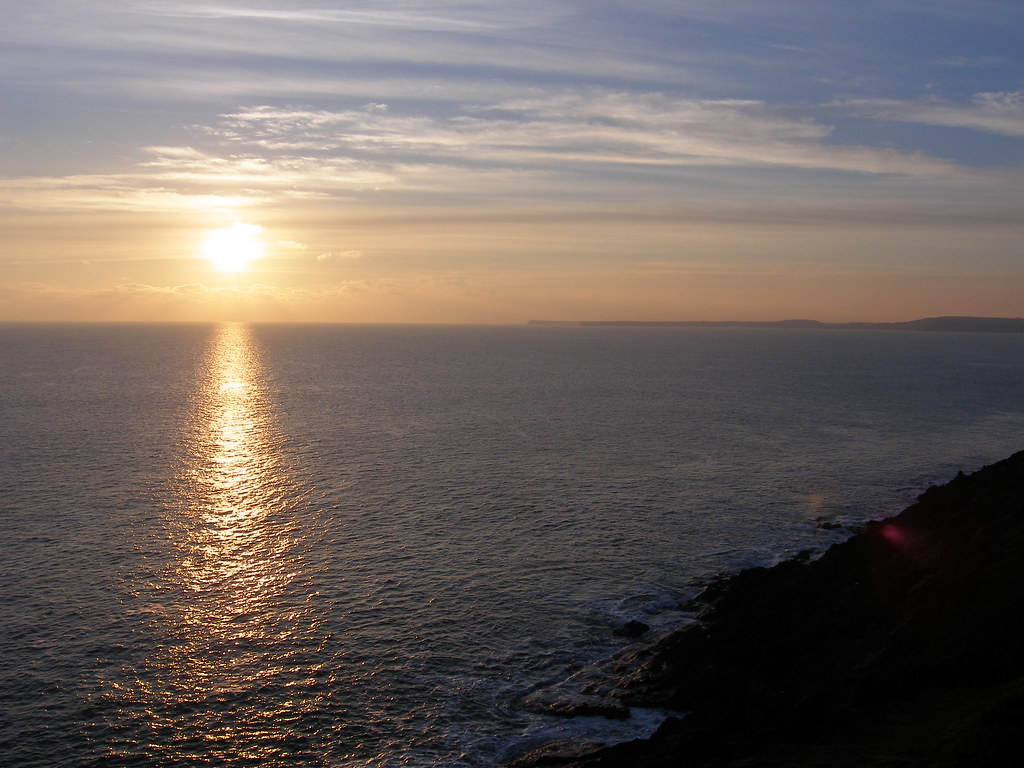
She started at the small car park in Cresswell at 0830 on a Monday morning. The temperature was six degrees Celsius. The wind was a steady northerly of about ten knots. The sky was clear. The North Sea, she said, was the colour of brushed steel.
The first day was Cresswell to Alnmouth, eighteen miles. The path follows the coast almost continuously, alternating between dune ridge, beach, and clifftop. There are several long beaches where the path is the beach itself, and these are walked at low tide where possible.
Quayle had timed her departures around the tide tables for each day, which she had printed at the local library before she left York. The first day's low tide at Druridge Bay was at eleven in the morning, which let her walk the beach for almost five miles instead of the dune-back path.
Druridge Bay is one of the great beaches of England and one of the emptiest. On her Monday in April she saw two dog walkers in five miles. The sand is flat, firm, and pale grey. The dunes behind hold a small nature reserve, the Hauxley Reserve, where she stopped for thirty minutes to watch lapwing displaying over the wet grassland.
She reached Alnmouth at four in the afternoon, with the tide rising. Alnmouth is an estuary village of about five hundred people, much of it built in the eighteenth century when it was a thriving grain port. The port silted up in 1806 and the village has been quiet ever since.
She stayed at a B&B on Northumberland Street, in a Georgian house that had been a sea captain's home and was now run by the captain's great-great-granddaughter. Quayle had her own bathroom and a window looking out at the Aln estuary.
The second day was Alnmouth to Craster, ten miles. The path runs along low cliffs for most of the distance, past Boulmer, a former smuggling village, and Howick, a small hamlet near the Howick Hall gardens. The hall is famous as the home of Earl Grey, the politician whose grandson named the tea after him.
At Craster she ate lunch in the small smokehouse cafe. Craster has been smoking kippers since the 1850s and the smokehouse is one of the last traditional operations in England. Quayle had a kipper with brown bread and tea. She does not normally eat fish at lunch. She made an exception.
The afternoon's walk from Craster to Embleton, where she was to stay the second night, is the section that contains Dunstanburgh Castle. The castle stands on a basalt headland and is one of the most photographed ruins in northern England. In April it was open to visitors at a reduced winter schedule.
Quayle paid the admission and spent forty minutes inside. The castle was begun in 1313 by Thomas, Earl of Lancaster, and is described by English Heritage as one of the largest and most dramatic ruins in the country. On her Tuesday afternoon she shared it with seven other visitors.
She walked on to Embleton, a village of about two hundred. She stayed at the Dunstanburgh Castle Hotel, a Victorian inn that has been operating since 1840. She had a single room with a view of the village green.
The third day was Embleton to Bamburgh, twelve miles. The path crosses Embleton Bay, climbs the low headland to Newton, and continues along beaches and dunes to Beadnell, Seahouses, and Bamburgh. The walking is easy. The views are continuously of the Farne Islands, two miles offshore.
At Seahouses she stopped to look at the boats that run to the Farnes. The Farne Islands hold one of the largest seabird colonies in England, including thirty-seven thousand pairs of puffins, and the boats run from late March to October. She did not take a boat. She had been to the Farnes in summer many times.
She reached Bamburgh at four in the afternoon. Bamburgh Castle, a large eleventh-century fortress restored by the Victorian industrialist William Armstrong in the 1890s, stands on a basalt outcrop above the village. It is the most photographed castle in England after Edinburgh.
She stayed at a small guest house in the village. She had dinner at the Lord Crewe Arms, a pub of indeterminate but considerable age. The owner told her the pub had certainly been operating in 1742 and probably for two hundred years before that. He could not be more specific.
The fourth day was Bamburgh to Holy Island via the causeway. The causeway to Holy Island is tidal and is crossable for about five hours twice a day. She had timed her crossing carefully and walked across at low water at eleven in the morning.
Holy Island, or Lindisfarne, is two miles of island connected to the mainland by the three-mile tidal causeway. It is the site of a seventh-century monastery, the home of the Lindisfarne Gospels, and a small village of a hundred and sixty residents. In April the visitor numbers are a fraction of summer's. She had the priory ruins almost to herself.
She stayed overnight on the island, at a small B&B in the village. The night on Holy Island is one of the experiences of the path. The day visitors leave with the tide. The island becomes, for twelve hours, very quiet.
The fifth day was Holy Island to Berwick, fifteen miles. She walked back across the causeway at low water at one in the afternoon and continued north along the coast. The path follows beaches and low cliffs to Berwick.
She reached Berwick-upon-Tweed at half past six in the evening. The town is England's northernmost, and its Elizabethan walls, completed in 1570, are among the finest in Europe. She walked the walls for an hour the following morning before she caught her train south.
The Northumberland Coast Path, she said, had been the easiest of her six. The terrain is gentle. The villages are close together. The accommodations are good. The path itself is uncrowded even in summer and was, in April, almost empty.
She intends to walk the Cumbria Coast Path in 2027. It is, she says, the next one along the list, and the list, by her reckoning, has eleven names on it still to go.