Astrid Pereira has been teaching knot classes at the outdoor centre in Plas y Brenin in north Wales since 2016. In that time she has taught somewhere between four and five hundred adult students the same four knots, in the same order, for the same reasons.
She is convinced, after watching how those students use what they learn, that the standard outdoor-curriculum knot list is two knots too long and one knot wrong.
The four knots she teaches now are the bowline, the trucker's hitch, the taut-line hitch, and the figure-eight on a bight. She does not teach the clove hitch in introductory classes. She has stopped teaching the half-hitch as a primary knot.
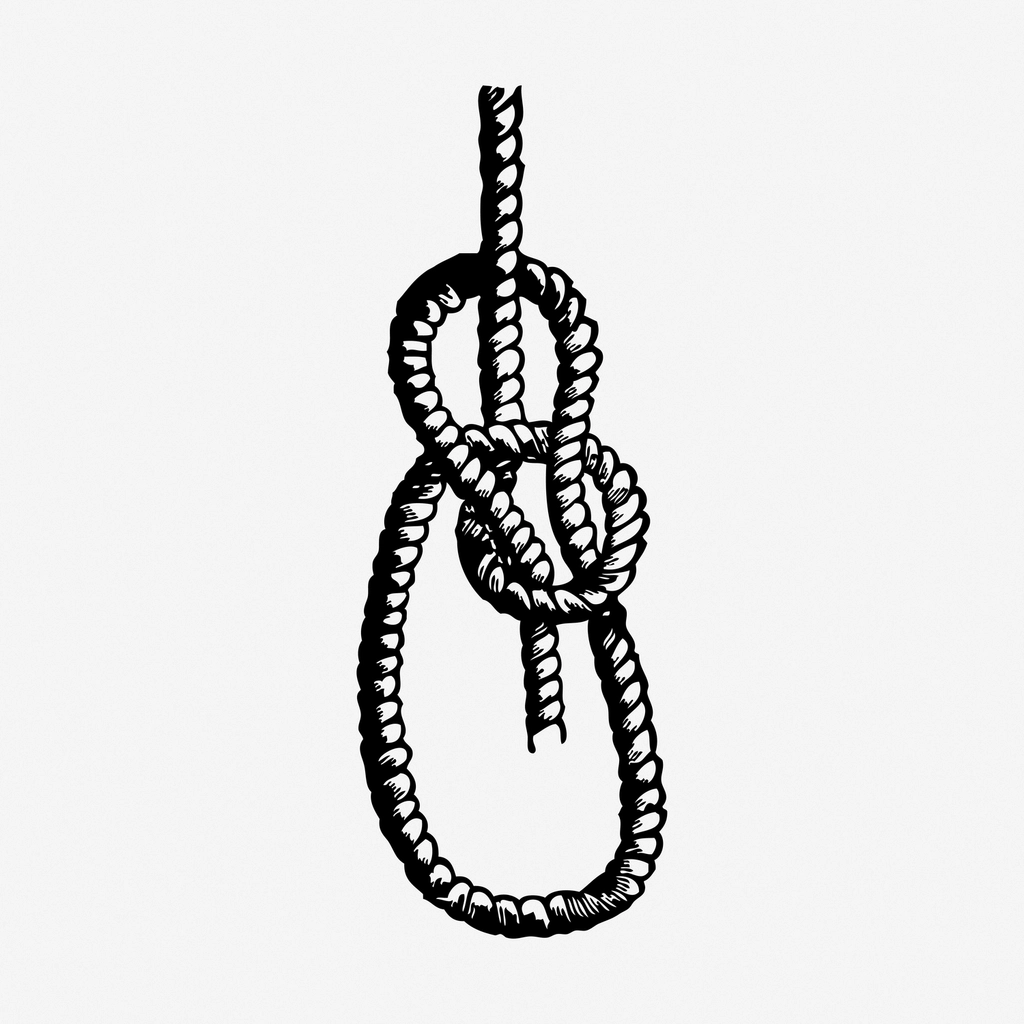
The bowline goes first because it is the only knot that does what people imagine all knots do, which is to make a fixed loop in the end of a line that will not slip under load and that can still be untied after that load has been on it for a week.
She teaches the rabbit-and-hole mnemonic only after she has demonstrated the knot three times in silence. The mnemonic is helpful for the first hour and a hindrance for the rest of a hiker's life. People who learn the bowline by rote never quite trust it. People who learn it by watching it form do.
The bowline secures the tarp ridgeline to a tree. It ties a clothesline between two saplings. It makes a non-slip handle on the end of a bear-bag line. It is the household tool of outdoor rope-work.
The trucker's hitch goes second because it is, in Pereira's accounting, the single most useful tensioning system in the backcountry. It will tighten a tarp ridgeline against the inevitable sag of damp line. It will lash a recalcitrant load to the top of a pack. It will haul a stuck boat off a sandbar with the help of a fixed object on shore.
She teaches the slipped-loop variant rather than the directional-figure-eight variant, because the slipped loop is faster, easier to untie when iced or wet, and easier to redress mid-pull when the load shifts.
Most of her students struggle with the trucker's hitch on the first attempt and have it in their hands by the third. By the end of a five-day course it is the knot they reach for without thinking.
The taut-line hitch is third. It is the knot for tent guy lines. It allows the line to be tensioned with one hand by sliding the hitch up the standing part. It holds under steady load and releases easily under hand pressure.
Most modern tents come with line-locks that do the same job mechanically. Pereira's view is that the line-locks fail and the knot does not, and that learning the knot now means that ten years from now, when the line-lock breaks on a wet night above three thousand feet, the hiker will not be reduced to tying half-hitches with cold fingers in the dark.
The figure-eight on a bight is fourth, and it is the knot she added to the list five years ago after watching too many students try to clip a carabiner into an overhand loop and fail to recognise that the overhand loop was the wrong knot for the job.
The figure-eight on a bight is the standard climbing tie-in, but Pereira teaches it for non-technical use: a fixed loop in the middle of a line, used for clipping a pack to a haul line, for marking a midpoint, for creating a handle in a rescue throw bag.
What she has stopped teaching is the clove hitch as a primary knot for hikers. The clove hitch is brilliant on a climbing belay. It is unreliable as a hitching knot for general use, because it walks under cyclic load and can fail without warning when the load is removed and reapplied.
She has also stopped teaching the half-hitch as a knot at all. The half-hitch is a building block, not a finished knot. Teaching it as a standalone knot encourages people to use it as one, which is how lines come off trees in the night.
Her syllabus now is twenty minutes for the bowline, twenty for the trucker's hitch, fifteen for the taut-line, ten for the figure-eight on a bight, and then the rest of the hour for the students to use them on real objects in real wind.
The real-objects-in-real-wind part is the part she fights for hardest with the centre's training office. Indoor knot tables produce people who can tie knots indoors on tables.
What she wants is people who can stand at the corner of a flapping tarp in a cold drizzle and tension it against a sapling in under twenty seconds, without thinking about what they are doing.
By the end of a good course, she gets perhaps half of them there. The other half know what they need to practise.
Both, she thinks, are valuable outcomes. The skill is not the knot. The skill is the certainty that the knot will do what you asked it to.
Filed under